
The challenge
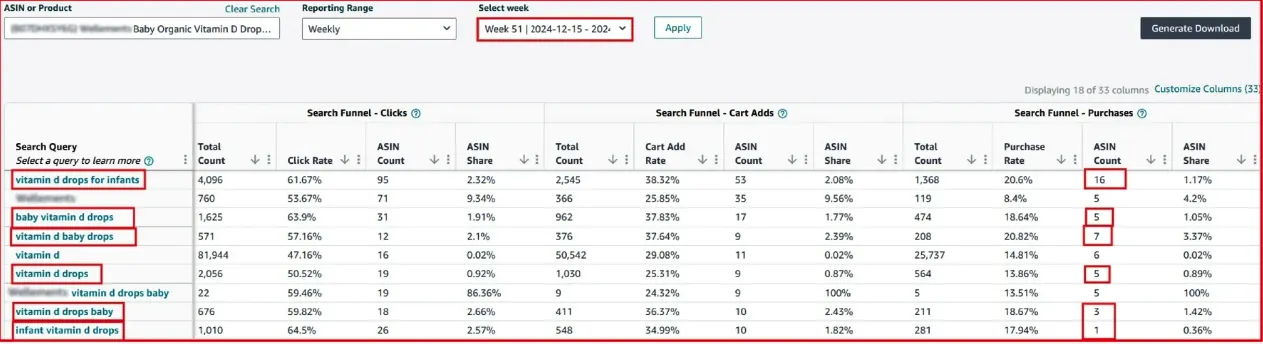
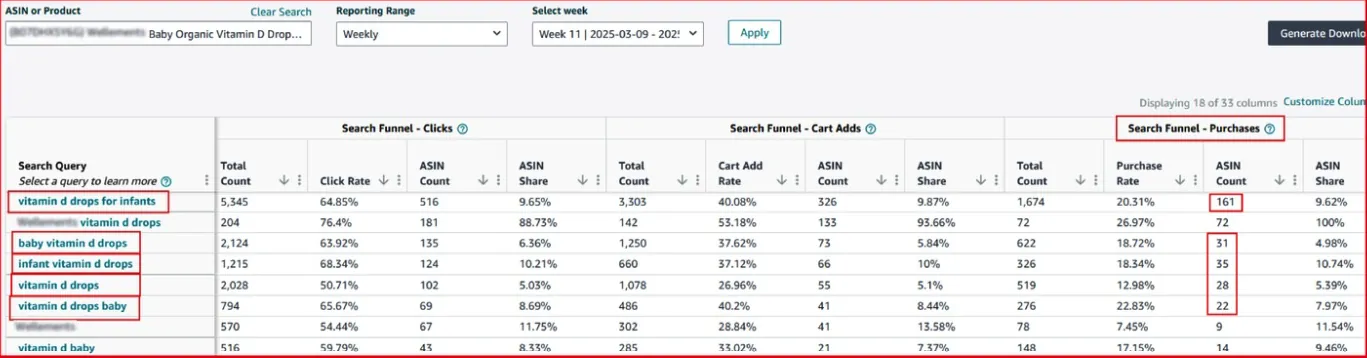
Revenue growth is easy to claim. Keyword-level purchase data is harder to fake. This is the Amazon Search Query Performance report for a baby vitamin D drops product, showing exactly how many purchases came from each keyword, week by week. In December, the brand was picking up 16 purchases a week from their biggest keyword. By May, it was 161. That's not an ACOS improvement. That's category dominance, built keyword by keyword.
What we did
We didn't just run ads. We built a keyword ownership strategy. Starting with deep SQP analysis of the brand's own catalog queries, combined with keyword research from licensed third-party tools, we identified the queries where the brand's own click and purchase share had the most room to grow. Listings were rewritten to align with exact buyer language. Main images were optimized to win the click on the highest-volume terms. PPC was structured to push ranking on the specific keywords where purchase share was lowest. Each week, SQP data told us what was working and what needed another push. The compounding result: one keyword at a time, then five, then the brand's whole keyword set moving.
Why it worked
Keyword-level purchase data is hard to fake. By combining Search Query Performance analysis with listing rewrites in buyer language, main images built to win the click, and rank-building PPC on the terms with the most share to gain, the brand went from one performing keyword to five or more.
Services behind this result
This result came from coordinated work across Listing optimization, Amazon agency for baby products, Supplements. One team owned the whole channel, so changes to listings, ads and operations happened in the right order.