What white-label Amazon catalog management means
Every Amazon account rests on its catalog: the ASINs, attributes, variation families, images and categories that decide whether a product can be found, bought and advertised. When the catalog breaks, ads stop serving, rank drops and inventory gets stranded. Many agencies are strong at strategy, creative or PPC but don’t have people who live in flat files and catalog cases. White-label Amazon catalog management means our in-house team does that work inside each client’s account while your agency stays the only name the client sees. It sits alongside our white-label Amazon account management and white-label listing optimization, so catalog structure, copy, ads and stock are handled by one team.
Flat files and bulk uploads, done carefully
Large catalogs are managed in Amazon’s category spreadsheet templates (flat files), not one listing at a time. Templates differ by product type, required fields and valid values change, and one wrong column can overwrite good data across hundreds of ASINs. We download the current template for each product type, build changes in batches, upload them in a controlled order and read the processing report after every upload. Errors are fixed and re-uploaded, and each batch is checked on the live detail page before the next goes in. Clients keep a record of exactly what changed, which makes it easy to explain results and roll back if needed.
Variations that keep reviews together
Parent-child variation families let a shopper choose size, colour, count or flavour on one detail page, and they keep reviews together. They also break easily: a child is created with the wrong variation theme, a parent is missing, or a new size lands on its own page. We build and repair families with the right theme for each product type, merge orphaned children where Amazon allows, split families that mix unrelated products, and keep variation names consistent so filters and Amazon’s AI shopping assistant Rufus read them correctly. Splitting or merging changes how reviews and ranking behave, so we explain the effect to your team before any change.
Suppressed listings and listing errors
A suppressed listing can be live in inventory and still invisible in search. Common causes are a main image that breaks Amazon’s image rules, a title that is too long or uses blocked characters, missing required attributes, a price Amazon thinks is wrong, or a compliance document that hasn’t been provided. We work from the client’s own Seller Central reports, fix the cause rather than the symptom, and recheck the ASIN in search after the fix. Products that also need documents or category approval are handed to our white-label Amazon compliance team.
Catalog cases, contributors and brand control
Some catalog problems can’t be fixed with an upload: a detail page that keeps reverting, images or titles changed by other sellers, an ASIN in the wrong category, or two products merged that shouldn’t be. With Brand Registry the brand has more control over its detail pages, and we open and follow catalog cases with the evidence Amazon asks for. Counterfeit and infringing listings go to our white-label Amazon brand protection service. We follow Amazon’s rules and don’t use workarounds that put the client’s account at risk.
Catalog first, then ads
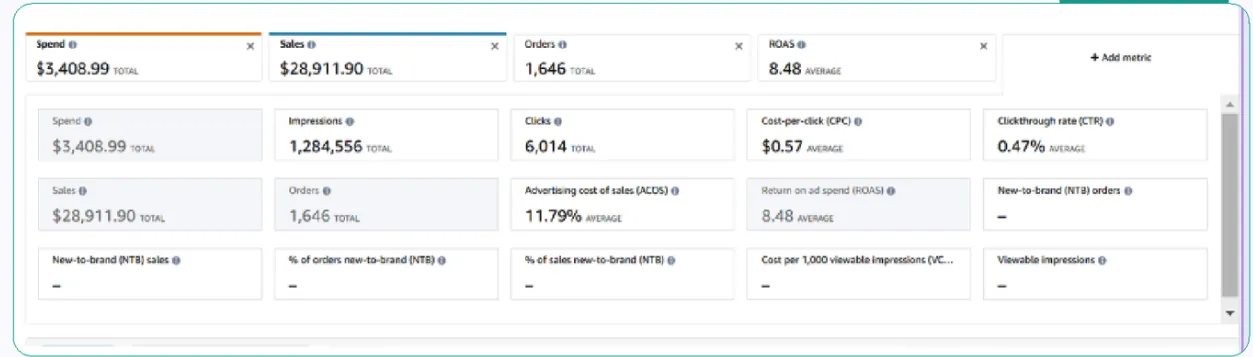
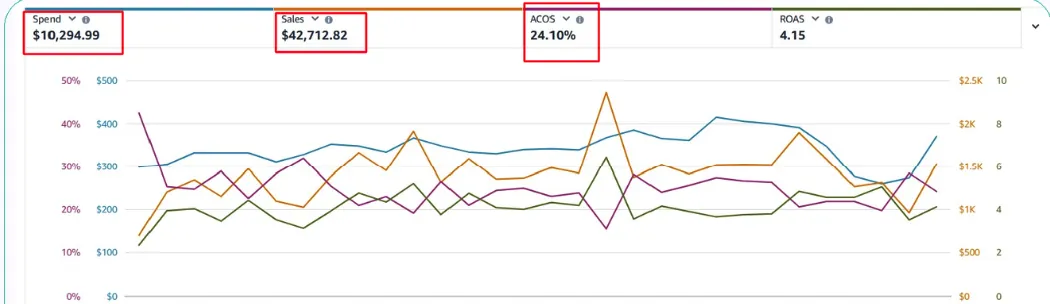
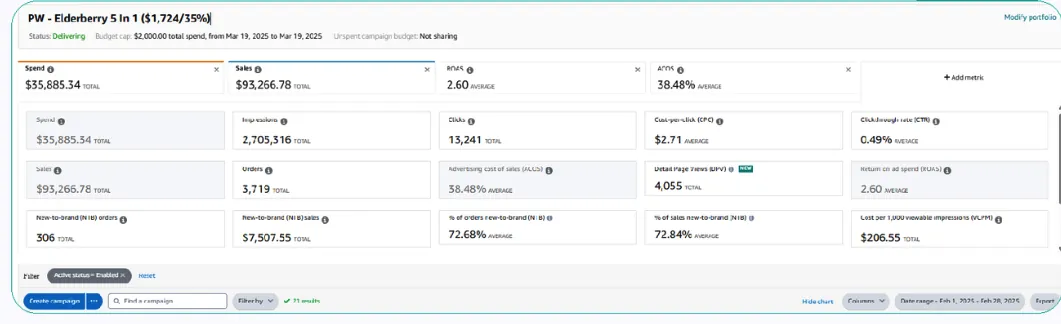
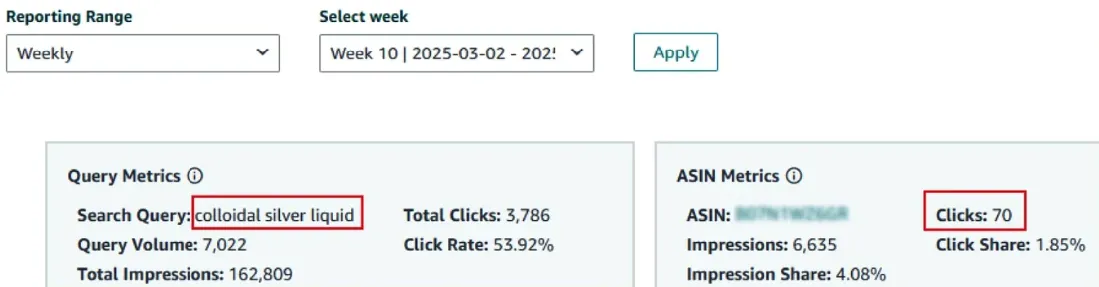
Advertising can’t fix a broken listing. In one private-label account we fixed the main image, copy and A+ Content first and then rebuilt PPC: ad sales doubled (+102%) and ACoS fell from 25.08% to 11.79%, see the listing-first case study. In another, a rebuilt campaign structure turned 54% more ad spend into 117% more ad revenue at a lower ACoS, see the PPC scaling case study. Results depend on product, margin and category. Clean catalog data also feeds A+ Content, PPC and Rufus optimization.
Seller Central, Vendor Central and every marketplace
We manage catalogs for 3P sellers and for 1P vendors through white-label Vendor Central management, across the US, Canada, Mexico, the UK, Europe and other Amazon marketplaces, including building and syncing listings when a client expands into a new marketplace. Brand owners who want this directly can see our Amazon agency for fixing listing issues page.
How to choose a white-label partner
Before you hand a partner a client, ask six questions. Is the team in-house or freelance? Will they sign an NDA and a non-solicit? Do reports and audits go out under your brand? Do they work in your Slack or project tool? Is access granted through platform permissions rather than shared passwords? And can you start with one client without a long contract? We answer yes to every one: our team is in-house, we work in your Slack or ClickUp, and every report and audit carries your logo. See how to choose the best white-label Amazon agency for a fuller checklist.
Why agencies choose CommerceKind
CommerceKind has helped generate $100M+ in revenue for client brands, manages 60+ brands in-house and $3M+ in monthly ad spend, is an Official TikTok Shop Partner with a 10K+ creator network, and is rated 4.4/5 on Trustpilot from 13 reviews.